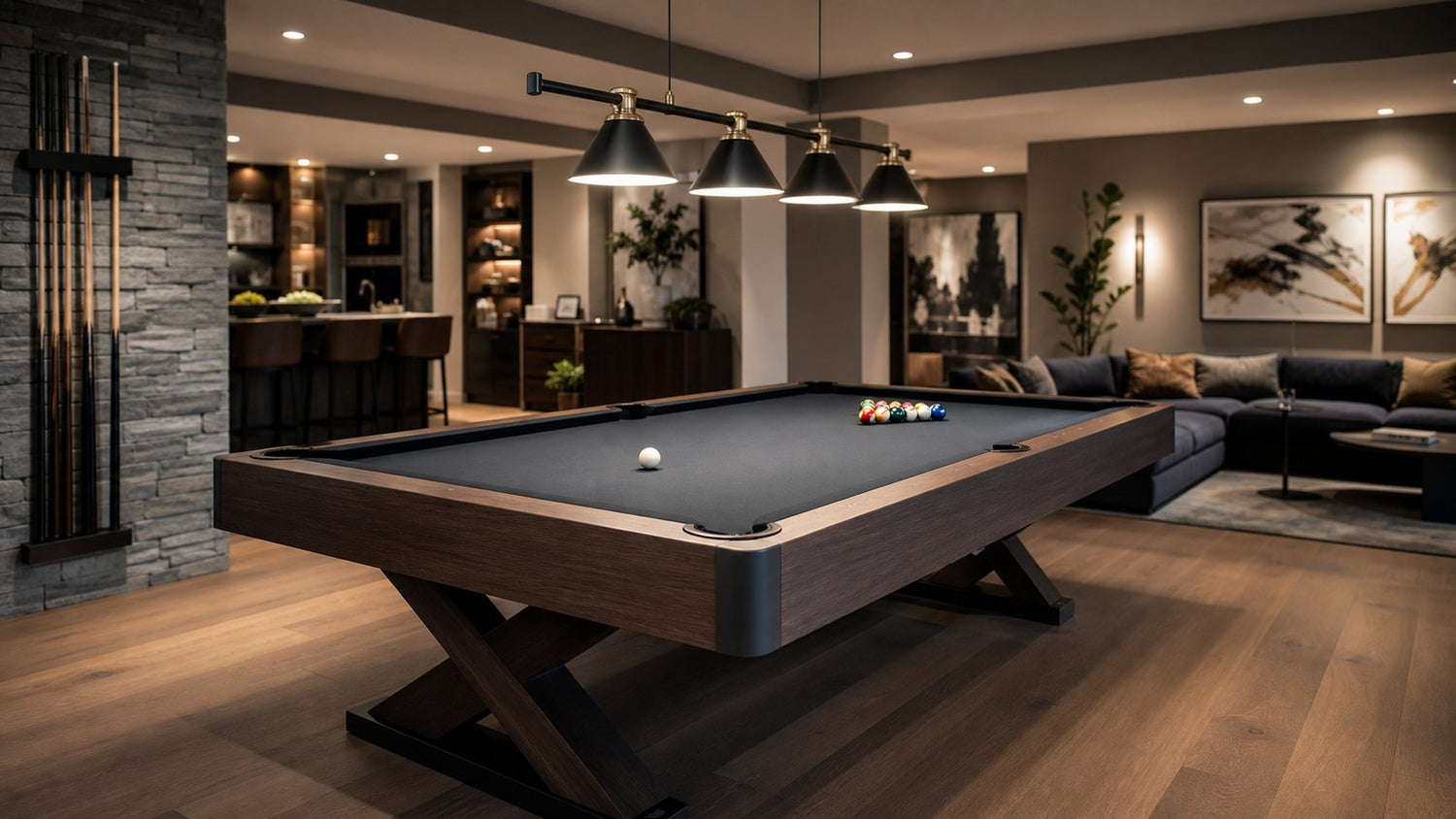
Overview: A great pool table room starts with playability. Style matters, but table size, cue clearance, lighting, flooring, seating, and storage decide whether the room feels comfortable every time you play.
Choose the Table Before Finalizing the Room
Pool tables come in different sizes, and each one needs enough space around it for cue movement. Start with the table size you want, then map out the room around it. This helps prevent a layout that looks good on paper but forces short cue shots along a wall.
Leave Comfortable Cue Clearance
Measure the playable area, not just the footprint of the table. Consider walls, posts, bar counters, furniture, and door swings. If the room has one tight side, you may be able to adjust seating or accessories before the table is installed.
Use Lighting That Supports the Game
Good lighting helps players see angles, rails, and the surface clearly. A fixture centered over the table is common, but the exact height and style should fit the room and avoid glare. Layered lighting around the rest of the room keeps the space comfortable for guests.
Keep Seating Close, Not in the Way
Game rooms work best when non-players can watch and talk without crowding the table. Place seating outside the cue path, and leave easy movement around scoreboards, cue racks, and side tables.
Plan Storage Early
Cues, balls, chalk, racks, brushes, and covers need a home. Wall racks and cabinets keep the room organized and help protect accessories between games.
The Bottom Line
A pool table can anchor the whole game room when the layout supports real play. Badlands can help you compare table styles and think through the space before you choose the final setup.